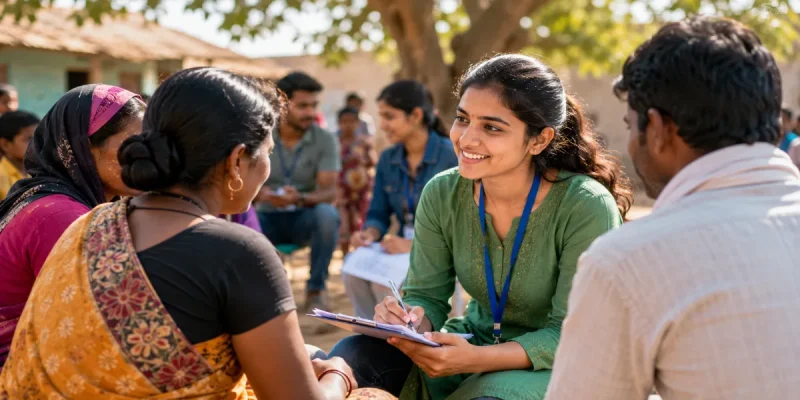

NGO management volunteer roles in India offer one of the most meaningful, skill-building, and career-launching pathways available to students, fresh graduates, career-changers, and professionals seeking purpose-driven work in 2026. India’s civil society sector one of the largest in the world, with over 3 million registered NGOs needs skilled volunteers and fellows across programme management, fundraising, communications, monitoring and evaluation, and community mobilisation. Whether you are looking for a structured paid fellowship, a stipended field role, or a flexible part-time or remote volunteering opportunity that builds genuine professional skills while creating real social impact, the Indian NGO sector in 2026 offers an exceptional range of options. This complete guide covers the roles, stipends, top organisations, required skills, and exactly how to find and apply for them.
💰 Stipends, Fellowships & Compensation (2026)
Typical Volunteer Stipend Range
₹5,000–₹25,000
Internshala · Idealist · NGO portals · June 2026
Structured Fellowships
₹18,000–₹50,000
Teach For India · Gandhi Fellowship · SBI YFI
Pure Volunteer (Unpaid)
Certificate + Skills
flexible / remote
Stipended Volunteer
₹5,000–₹15,000
per month
Paid Fellowship
₹18,000–₹35,000
per month
Full-time NGO Manager
₹30,000–₹70,000
post-fellowship roles
🌍 Why NGO Management Volunteering Is a Powerful Career Move in 2026
India’s social development sector has professionalised dramatically over the past decade. The NGO of 2026 is not the informal charity of an earlier era leading organisations like Pratham, CRY (Child Rights and You), Smile Foundation, Goonj, and Akshaya Patra operate with the rigour of well-run corporations: structured programme management, data-driven monitoring and evaluation, professional fundraising and donor management, sophisticated communications and digital campaigns, and formal financial governance under FCRA and the Income Tax Act. This professionalisation means that an NGO management volunteer role today builds genuinely transferable, market-valued professional skills project management, stakeholder coordination, data analysis, grant writing, communications in a way that earlier volunteering simply did not.
For students and fresh graduates, an NGO management volunteer role or fellowship is one of the most effective ways to build a differentiated resume. Employers across sectors corporate CSR teams, consulting firms, impact investment funds, government programmes, and development agencies specifically value demonstrated social-sector experience as evidence of initiative, empathy, real-world problem-solving, and the ability to deliver results in resource-constrained environments. A candidate who spent a year managing a Pratham education programme or coordinating a Goonj disaster-relief logistics operation brings a depth of practical management experience that classroom learning cannot replicate. Many of India’s most prestigious fellowships Teach For India, Gandhi Fellowship, Prime Minister’s Rural Development Fellowship explicitly position themselves as leadership development programmes whose alumni are actively recruited by top employers across sectors.
The rise of corporate CSR has created an entire professional ecosystem around the NGO sector. India’s mandatory CSR law requiring companies above defined thresholds to spend 2% of net profit on social initiatives has channelled tens of thousands of crores annually into the development sector, professionalising NGO operations and creating sustained demand for skilled programme managers, M&E specialists, and CSR liaison professionals. NGO management volunteers who develop expertise in CSR project implementation, impact measurement, and corporate-NGO partnership management are positioned for some of the fastest-growing and best-paid careers in the social sector. The transition from NGO volunteer to corporate CSR manager (at salaries of ₹8–₹20 LPA) is a well-trodden and increasingly common career path in 2026.
Remote and part-time NGO volunteering has expanded enormously since 2020, opening genuine social-sector participation to students, working professionals, and homemakers who cannot commit to full-time field roles. Skilled volunteering contributing professional skills like graphic design, content writing, social media management, website development, data analysis, grant research, and translation to NGOs remotely is now a structured and high-impact way to contribute. Platforms like iVolunteer, Volunteer India, and the skilled-volunteering arms of major NGOs match professionals’ specific skills with organisational needs, allowing a working professional to contribute 5–10 hours per week of high-value skilled work while building a portfolio of social impact and professional skills.
💡 Volunteer vs Fellowship vs Internship Vs. Job: Understanding the Spectrum
NGO opportunities span a spectrum: pure volunteering (flexible, usually unpaid, provides certificate and experience); stipended volunteering (modest monthly stipend covering expenses, ₹5,000–₹15,000); structured fellowships (competitive, well-paid ₹18,000–₹50,000, 1–2 year leadership programmes like Teach For India or Gandhi Fellowship); internships (usually 2–6 months, for students, stipended or unpaid); and full-time paid jobs (programme officer, manager, ₹25,000–₹70,000+). Understand which category fits your situation, financial needs, and time availability before applying a student seeking experience has different optimal choices than a career-changer who needs a living wage.
🏢 Top NGOs & Fellowships Recruiting Volunteers
⚡ Types of NGO Management Volunteer Roles
NGO management volunteering spans a wide range of functional roles. Understanding which area matches your skills and career goals significantly improves both your application success and the value you derive from the experience.
📋 Programme Management & Coordination
Programme management is the operational core of any NGO coordinating field activities, managing beneficiary relationships, organising community events and camps, supervising and motivating other volunteers, and preparing activity reports for management and donors. Programme management volunteer roles at education NGOs (Pratham, CRY), health NGOs, and livelihood organisations provide the most directly transferable management experience: stakeholder coordination, timeline and resource management, problem-solving under field constraints, and outcome reporting. These roles are where most NGO volunteers begin, and where the clearest skill development happens for those targeting management careers in any sector. Strong programme volunteers are consistently the first considered for full-time programme officer and manager positions when they arise.
💸 Fundraising, Grants & CSR Liaison
Fundraising and resource mobilisation is the most career-valuable and highest-demand skill area in the NGO sector. Grant proposal writing researching funding opportunities, articulating programme logic models, drafting compelling proposals for foundations, CSR funders, and international donors is a genuinely scarce skill that commands premium roles. Donor relationship management, crowdfunding campaign design (on platforms like Milaap, Ketto, GiveIndia), and CSR partnership liaison (managing the relationship between a corporate funder and the NGO’s programme delivery) are all skills that translate directly into well-paid careers in development consulting, philanthropy advisory, and corporate CSR. Volunteers who develop grant-writing competence even on a few successful proposals build one of the most marketable credentials in the entire social sector.
📊 Communications, Digital & M&E
Communications and Monitoring & Evaluation (M&E) are the two functional areas where skilled remote volunteering has the highest impact. Communications volunteers manage NGO social media, write impact stories and newsletters, design campaign creatives, produce videos, and maintain the organisation’s digital presence skills that are directly transferable to marketing and content careers. M&E volunteers design data collection tools, analyse programme outcome data (using Excel, Google Sheets, and increasingly tools like KoboToolbox, Power BI, and Tableau), and prepare impact reports that demonstrate programme effectiveness to donors one of the most analytically rigorous and career-valuable skill areas in the sector. For students from data, statistics, and analytics backgrounds, M&E volunteering provides genuine applied data experience with real-world social datasets that strengthens any subsequent data career significantly.
📋 Who Can Apply & What NGOs Look For
NGO volunteer roles are among the most inclusive opportunities available but competitive fellowships and skilled roles do have specific expectations. Here is a complete breakdown of eligibility and the qualities that distinguish successful applicants.
1
Educational Qualification: Varies by Role Level
For general field and programme volunteering, there is often no minimum educational requirement beyond basic literacy and a genuine commitment to the cause many NGOs welcome students from class XII onward for community-level volunteering. For structured fellowships (Teach For India, Gandhi Fellowship), graduation in any discipline is mandatory, and these are highly competitive leadership programmes drawing graduates from top universities. For skilled and management volunteer roles (grant writing, M&E, communications), relevant graduation or postgraduate qualifications (social work, development studies, management, communications, statistics) and demonstrable skills are expected. An MSW (Master of Social Work), MA in Development Studies, or MBA strengthens applications for senior volunteer and full-time NGO management roles substantially.
2
Genuine Commitment & Reliability
The single most important quality NGOs look for in volunteers is genuine, sustained commitment. NGOs invest significant time orienting and training volunteers, and volunteer attrition is a real operational challenge for the sector. Demonstrate in your application and interview that you understand the cause, have a sincere motivation beyond resume-building, and can reliably honour the time commitment you offer even if it is just 5 hours per week. Volunteers who reliably deliver on their commitments, communicate proactively when facing constraints, and treat the volunteer role with the same professionalism as a paid job are valued enormously and are the ones who receive strong references, conversion to paid roles, and access to the best opportunities in the sector.
3
Communication & Local Language Skills
For field and community-facing roles, proficiency in the local regional language is essential NGO programme volunteers work directly with communities in Hindi, Tamil, Bengali, Marathi, or the relevant state language, and the ability to build trust and communicate clearly with beneficiaries is fundamental. For management, fundraising, and communications roles, strong English (written and verbal) is important for donor correspondence, grant writing, and report preparation. Bilingual volunteers who can bridge community-level field work in the regional language and management-level communication in English are particularly valuable and are often fast-tracked into coordination roles that span both functions.
4
Relevant Skills for Skilled / Remote Volunteering
Skilled volunteering roles require demonstrable competence in the specific skill: graphic design (Canva, Adobe Creative Suite), content and copywriting, social media management, website development (WordPress, basic HTML), video editing, data analysis (Excel, Google Sheets, basic statistics), translation, photography, or financial/accounting support. For these roles, a portfolio demonstrating your skill sample designs, writing samples, a website you built, an analysis you performed is far more persuasive than qualifications alone. Working professionals offering 5–10 hours per week of high-value skilled work are in genuine demand across the sector, and the impact-to-effort ratio of skilled volunteering is exceptionally high for both the volunteer’s skill development and the NGO’s capacity.
5
Empathy, Cultural Sensitivity & Field Readiness
NGO work involves engaging with vulnerable communities children, the elderly, marginalised groups, disaster-affected populations with empathy, respect, and cultural sensitivity. NGOs assess (in interviews and through field orientation) whether a volunteer can engage with communities without condescension, maintain the dignity of beneficiaries, and adapt to field conditions that may be physically and emotionally challenging. For field roles specifically, a willingness to travel to rural or underserved areas, work in basic conditions, and remain emotionally resilient when confronting difficult social realities is essential. The volunteers who thrive in the sector combine genuine empathy with professional discipline caring deeply about the cause while delivering reliable, high-quality work.
🎁 Benefits & What You Gain
🧠
Genuine, Transferable Management Skills
NGO management volunteering builds a portfolio of professional skills project coordination, stakeholder management, communication, data analysis, grant writing, event management that are directly valued across corporate, consulting, government, and development careers. The resource-constrained, high-impact nature of NGO work develops resourcefulness and problem-solving ability that structured corporate environments rarely teach at an early career stage. Employers consistently recognise demonstrated social-sector management experience as evidence of initiative and capability.
📜
Certificates, References & Resume Differentiation
Reputable NGOs provide volunteer certificates and, more valuably, professional references that carry genuine weight in subsequent job applications. A reference from a recognised organisation like Pratham, CRY, or Goonj attesting to your reliable, high-quality contribution is a credible third-party endorsement of your professional capability. For students applying to higher education (especially MBA, MPP, and development studies programmes) and competitive fellowships, demonstrated social-sector commitment significantly strengthens the application profile and provides authentic material for application essays and interviews.
🔗
Professional Network & Career Pathways
The social sector has a strong, collaborative professional network. Volunteers build relationships with NGO leaders, CSR managers, development consultants, government officials, and fellow volunteers who become a valuable professional network for the rest of their careers. Fellowship alumni networks (Teach For India, Gandhi Fellowship) are particularly powerful alumni occupy leadership positions across NGOs, social enterprises, government programmes, and corporate CSR teams, and actively support each other’s careers. Many volunteers transition into full-time roles at the organisation they volunteered with, or are referred to opportunities through the network they built.
🌐
Remote & Flexible Participation
Skilled and remote volunteering allows students, working professionals, and homemakers to contribute meaningfully without full-time commitment. Contributing 5–10 hours per week of skilled work (design, writing, data analysis, social media) from home builds both social impact and professional portfolio simultaneously. Platforms like iVolunteer and the UN Online Volunteering programme make it possible to contribute to organisations across India and globally without geographic constraint a working professional in a Tier 2 city can contribute skilled volunteering to a national NGO entirely remotely.
❤️
Genuine Social Impact & Personal Fulfilment
Beyond career benefits, NGO volunteering offers the genuine satisfaction of contributing to social change helping children access education, supporting disaster-affected communities, improving healthcare access, or protecting the environment. This sense of purpose and the perspective gained from engaging with India’s social realities is itself deeply valuable, and many volunteers describe their NGO experience as among the most personally meaningful of their lives. The combination of professional growth and authentic social contribution is what makes NGO management volunteering uniquely rewarding.
📨 How to Find & Apply for NGO Volunteer Roles
Here is a precise, step-by-step approach to finding and applying for the right NGO volunteer or fellowship opportunity for your situation.
Search on Internshala, iVolunteer & NGO Job Portals
Internshala (internshala.com) carries the largest volume of stipended NGO volunteer and internship listings, with a strong student focus. iVolunteer (ivolunteer.in) is India’s leading dedicated volunteering platform, matching skilled and field volunteers with vetted NGOs. DevNetJobsIndia and the NGOBOX job portal carry professional and paid NGO management roles. Idealist (idealist.org) lists both Indian and international social-sector opportunities. For UN volunteering, the UN Online Volunteering platform (onlinevolunteering.org) offers remote opportunities with global organisations. Set up alerts on these platforms for “NGO volunteer,” “programme volunteer,” “social sector fellowship,” and your specific skill area.
Apply Directly on Major NGO & Fellowship Websites
Major organisations recruit directly through their websites: teachforindia.org (Teach For India Fellowship), gandhifellowship.org (Gandhi Fellowship), pratham.org/get-involved, cry.org/volunteer, smilefoundationindia.org, goonj.org/volunteer, and akshayapatra.org. Fellowship applications (Teach For India, Gandhi Fellowship) typically open annually with defined application windows and involve multi-stage selection (online application, video/written assessment, assessment centre, interview) apply early in the window and prepare thoroughly. For organisational volunteering, the “Get Involved” or “Volunteer” or “Careers” section of each NGO’s website carries current opportunities. Direct application through the official website ensures your application reaches the organisation’s genuine recruitment process.
Write a Purpose-Driven Application & Build a Portfolio
NGO applications value authentic motivation far more than polished credentials. In your cover letter or statement of purpose, articulate a genuine, specific reason for wanting to work with that particular organisation and cause reference the NGO’s actual programmes and impact, and connect them to your own values or experiences. Avoid generic “I want to give back to society” statements. For skilled volunteer roles, attach a portfolio (design samples, writing pieces, a data analysis, a website link) that concretely demonstrates your skill. For fellowships, prepare strong responses to the application essays well in advance these are often the primary selection filter, and thoughtful, specific, reflective answers consistently outperform generic ones.
Verify the NGO’s Legitimacy & Credentials
Before committing to any NGO, verify its legitimacy: check that it is registered (as a Trust, Society, or Section 8 Company), has valid 80G and 12A tax registrations, and ideally FCRA registration if it receives foreign funding. Reputable NGOs are transparent about their registration, leadership, financials, and impact. Platforms like GuideStar India and GiveIndia vet and certify NGOs for transparency and accountability an NGO’s presence on these platforms is a positive credibility signal. Be cautious of any “volunteer opportunity” that asks you to pay a fee, as legitimate volunteering never requires the volunteer to pay the organisation (genuine paid volunteering programmes that include accommodation and training, like some international ones, are different and should be clearly structured). For field placements, confirm the safety arrangements, accommodation, and support structure before committing, especially for placements in unfamiliar areas.
Start Small, Deliver Reliably & Grow Into Bigger Roles
The most effective way to build an NGO career is to start with a manageable commitment, deliver reliably and with genuine quality, and grow into larger roles based on demonstrated value. A volunteer who reliably delivers excellent work on a small initial assignment quickly earns the trust that leads to bigger responsibilities, stipended roles, strong references, and conversion to full-time positions. Treat even an unpaid volunteer role with full professionalism meeting deadlines, communicating proactively, and bringing genuine effort and you will find that the social sector rewards reliability and commitment with expanding opportunity. Many of today’s NGO leaders and CSR heads began as volunteers who simply proved, over time, that they could be trusted to deliver.
Find Opportunities on These Platforms:
📅 Updated
June 2026 (Active)
💼 Type
Volunteer / Fellowship
📊 Opportunities
10,000+ Pan-India
❤️ Build Real Skills, Create Real Impact Start Your Social Sector Journey
India’s NGO sector offers students, graduates, and professionals a uniquely rewarding combination of genuine social impact and market-valued skill development. Whether you want a competitive fellowship, a stipended field role, or flexible remote skilled volunteering, register on iVolunteer, apply through official NGO websites, and start with a commitment you can reliably honour. Your social sector journey begins with a single genuine step.




Leave a Comment