

For freshers looking to build a meaningful career in India’s development sector, an NGO internship in 2026 is not just a resume line it’s a genuine career-defining experience. India’s non-profit and social sector offers internship opportunities across public health, education, gender equality, climate, livelihoods, and governance that give first-time professionals real responsibility, real fieldwork, and a real understanding of the country’s most pressing development challenges. Whether you’re a final-year student, a recent graduate, or someone pivoting from the corporate world, this guide covers every aspect of finding, applying for, and making the most of an NGO internship in India.
💰 Stipend & Compensation (2026)
Average Monthly Stipend
₹5,000–₹20,000
Internshala · Devex · DevNetJobs India · June 2026
INGO / UN Agency Stipend
₹25,000–₹50,000
UNICEF, UNDP, WHO India & Gates-funded orgs
Small Local NGO
₹3,000–₹8,000
/month
National NGO
₹8,000–₹18,000
/month
INGO / Philanthropy
₹18,000–₹35,000
/month
Duration
1–6 Months
often extendable
🌍 Why an NGO Internship Is the Best First Step in Development Sector Careers
India’s development sector is not one you can enter credibly from a desk. Hiring managers at leading NGOs Pratham, Oxfam India, Save the Children, PATH India, Tata Trusts, UNICEF India consistently report that the candidates who stand out are those who have spent time in the field: conducted baseline surveys, attended community meetings, observed government health programmes at the district level, or supported a project M&E process. An NGO internship gives a fresher this credibility before they have a single year of full-time employment experience and that credibility is genuinely irreplaceable. No amount of academic study or case study reading substitutes for having stood in a village in Rajasthan or a Mumbai slum and witnessed the actual complexity of development implementation.
For TISS, IRMA, XIMB, IIFM, and management institute students with a development sector specialisation, NGO internships are often a mandatory academic requirement. But their value extends far beyond the academic transcript. The professional network you build during an NGO internship your supervisor, the senior managers you interact with, the peer interns from other institutions is your first professional development sector network, and this sector is tight-knit enough that these relationships meaningfully influence your job prospects for years afterward. Supervisors who observe strong intern performance routinely create roles for strong interns or refer them to peer organisations when full-time positions open.
The quality of NGO internship opportunities available to Indian freshers in 2026 has improved dramatically over the past five years. UNICEF India, UNDP India, WHO India, and several Gates Foundation-funded implementing partners now run structured internship programmes with monthly stipends of ₹25,000–₹50,000, defined learning objectives, assigned mentors, and formal mid-term and end-of-term reviews. Tata Trusts, Azim Premji Foundation, and Dasra offer fellowship-style internships with specific thematic focuses. These aren’t just coffee-fetching positions interns at these organisations are assigned real analytical tasks, contribute to programme design documents, and in some cases present their findings to senior leadership teams.
Remote and hybrid internship options have expanded significantly since 2022. Many national NGOs and INGOs now offer a hybrid model 2–3 weeks of remote desk-based work (research, data analysis, document drafting) followed by a field visit component. Fully remote NGO internships in areas like communications, research, data analysis, and M&E have also become established, making the development sector genuinely accessible to freshers in Tier 2 and Tier 3 cities who cannot relocate to Delhi or Mumbai for a 2–3 month internship. However, field-based internships remain significantly more valuable for career development if you can manage the relocation, always choose field exposure over desk work at this stage of your career.
💡 Stipend Vs. Unpaid: Know the Difference & Your Rights
Some NGOs particularly smaller grassroots organisations still offer unpaid internships, justifying it as “purely experiential.” While there is value in certain well-structured unpaid opportunities, always assess whether the work you’re being asked to do constitutes real labour that should be compensated. Large INGOs, UN agencies, philanthropy-backed foundations, and USAID/FCDO implementing partners always pay a stipend. If a well-funded organisation is offering an unpaid internship for 3+ months, it’s reasonable to negotiate for at least a travel and meals reimbursement. The Indian government has not yet legislated minimum internship stipends comprehensively, but the practice norm at credible organisations is clear paid internships are the professional standard.
🏢 Top Organisations Offering Internships
📋 Eligibility & What Organisations Look For
NGO internship selection is quite different from corporate internship hiring. The bar is accessible for freshers but organisations look for specific signals that distinguish genuinely motivated candidates from those who are simply filling a CV gap. Here is a detailed breakdown of what you need and what you should demonstrate.
1
Currently Enrolled in or Recently Graduated from a Relevant Programme
Most NGO internships are open to students in their final year or recent graduates (within 1–2 years of graduation) from any degree programme but applications from students in Social Work (BSW/MSW), Development Studies, Public Health, Economics, Political Science, Environmental Studies, Law, Mass Communication, and Management (particularly from TISS, IRMA, XIMB, IIFM, ISDM, or mainstream management institutes) are particularly competitive. Some INGO and UN-agency internships specify a postgraduate degree requirement, but this is the minority. Many national NGOs and smaller organisations actively welcome undergraduates from any discipline who demonstrate genuine motivation and relevant voluntary or community engagement experience.
2
Demonstrated Mission Alignment: Not Just Academic Interest
The single most important differentiator in NGO internship applications is genuine mission alignment and organisations can tell the difference between a candidate who has intellectually engaged with development issues and one who has only read about them. Evidence of real engagement includes voluntary work at an NGO or community organisation; NSS (National Service Scheme) or NCC activities with a specific community project; participation in a model UN, policy simulation, or social innovation competition; field research or fieldwork conducted as part of academic study; or personal lived experience of the development issues you want to work on. A cover letter that specifically connects your personal motivation to the organisation’s thematic focus not generic “passion for social change” language is consistently more effective than one that uses templated development sector phrases.
3
Strong Written Communication in English (and Hindi for Field Roles)
Clear written communication is not a nice-to-have for NGO interns it’s a functional requirement. Interns are regularly asked to draft field visit notes, research summaries, social media content, donor communication drafts, and internal reports. The ability to write in plain, precise, jargon-free English that communicates complex social issues to a non-specialist audience is specifically tested in many NGO internship selection processes through a written assignment or case study exercise. For field-based roles in Hindi-speaking states (UP, Bihar, Rajasthan, MP, Jharkhand), functional Hindi is a practical necessity for community interaction. Bilingual communication ability English for reporting, Hindi for field work significantly strengthens your application for most field internships.
4
Basic Computer & Data Literacy
Proficiency in Microsoft Office (Word, Excel, PowerPoint) and Google Workspace (Docs, Sheets, Forms) is a baseline expectation for all NGO interns, including those in field-based roles. For research and M&E intern roles, basic data collection tool skills KoBoToolbox, ODK (Open Data Kit), or Google Forms for quantitative surveys and basic data analysis in Excel or Google Sheets are increasingly expected. For communications and advocacy intern roles, Canva for basic design, Buffer or Hootsuite for social media scheduling, and familiarity with content management systems (WordPress) are valued. Advanced skills SPSS, R, QGIS, Tableau are genuine differentiators for research and M&E focused internships at INGOs and foundations.
5
Availability & Willingness for Field Work / Travel
Field-based NGO internships which are the most career-building category require genuine commitment to extended field stays in rural or semi-urban locations that may lack urban amenities. Being honest with yourself and your prospective employer about your actual willingness and ability to live in a small town or village for 4–8 weeks is important. Organisations that place interns in field locations want someone who will engage fully with the community work not someone who is uncomfortable and counting the days to return to a city. If you genuinely want field experience, lean into the discomfort and commit to it completely it’s typically the most transformative professional experience available at this career stage.
6
Thematic Knowledge in Your Area of Interest
You don’t need to be an expert you’re a fresher. But you do need to demonstrate that you’ve done more than surface-level reading on the thematic area you’re applying to work in. If you’re applying to a maternal and child health programme, know what POSHAN Abhiyaan is and what its current status is. If you’re applying to an education NGO, understand the Annual Status of Education Report (ASER) and its key findings. If you’re applying to a gender equality organisation, be conversant with NFHS-5 data on key gender indicators. This level of preparation which takes 3–4 hours of focused reading before any interview immediately distinguishes you as a serious candidate and is the most common gap that separates shortlisted from rejected applicants at the interview stage.
7
A Specific Learning Agenda: Not Just “Experience”
The most impressive NGO internship applications and the most impressive interns in practice are those who arrive with a specific learning agenda rather than a vague desire for “experience.” Being able to articulate “I want to understand how a community health programme manages data quality across multiple field sites” or “I want to learn how an organisation designs a log frame for an education programme” is both more compelling in an application and more useful for your own development. It signals intellectual seriousness, helps your supervisor structure your assignment meaningfully, and ensures you leave the internship with specific competencies rather than a general impression of NGO work.
⚡ Types of NGO Internships Available for Freshers
India’s development sector offers a genuinely wide range of internship typologies. Understanding which type suits your interests, skills, and career goals before applying significantly improves your targeting and success rate.
📊 Research & M&E Internships
Research and M&E internships are among the most intellectually rich available to freshers and are the most valued by graduate school admission committees and development sector employers alike. You’ll typically support a survey design and implementation process, conduct field interviews or focus group discussions, code and clean quantitative or qualitative data, and contribute to a research report or evaluation brief. Organisations offering strong research internships include ICRW, Population Council India, PHFI (Public Health Foundation of India), Institute for Human Development, and the research wings of large INGOs. A completed field research assignment with a named contribution to a published or internal report is among the strongest portfolio pieces a fresher can present in a job interview.
📣 Communications & Advocacy Internships
Communications and advocacy internships are ideal for freshers from journalism, mass communication, political science, and humanities backgrounds. You’ll typically manage the organisation’s social media presence, draft blog posts and newsletter content, create infographics, support the development of donor impact reports, and sometimes contribute to policy brief preparation. These roles are largely remote-compatible and are offered widely by national and international NGOs. They provide strong portfolio-building opportunities published bylines, live social media content, and named contributions to published documents that are immediately useful for future job applications. Strong writing samples submitted with the application are the primary selection criterion for these roles.
🌿 Field Programme & Community Mobilisation Internships
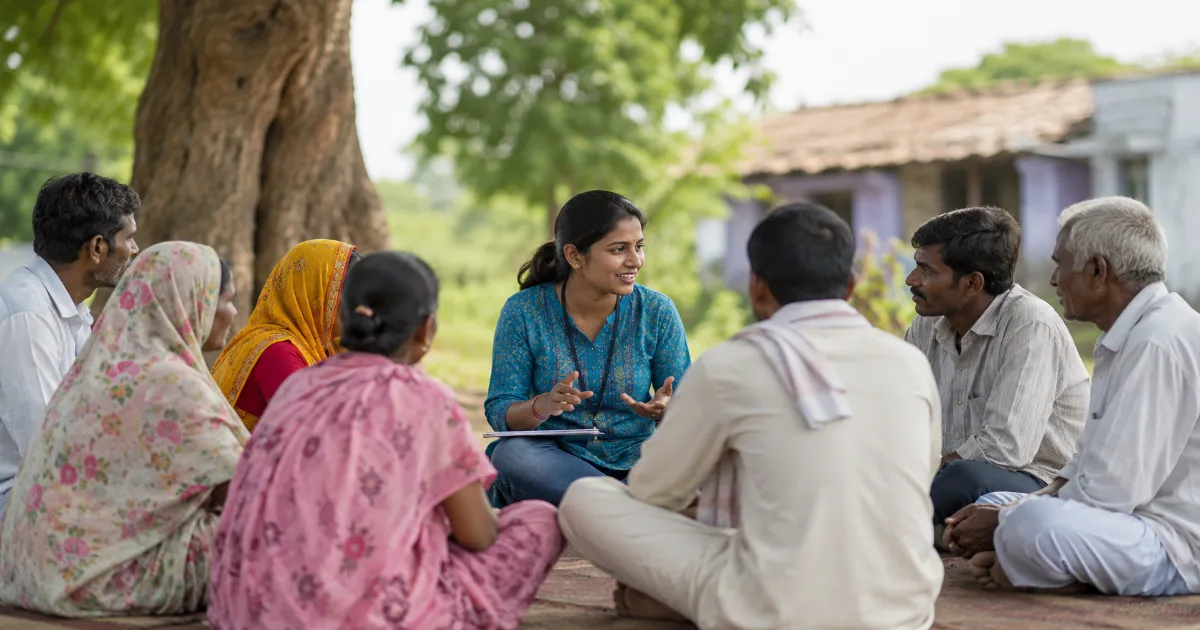
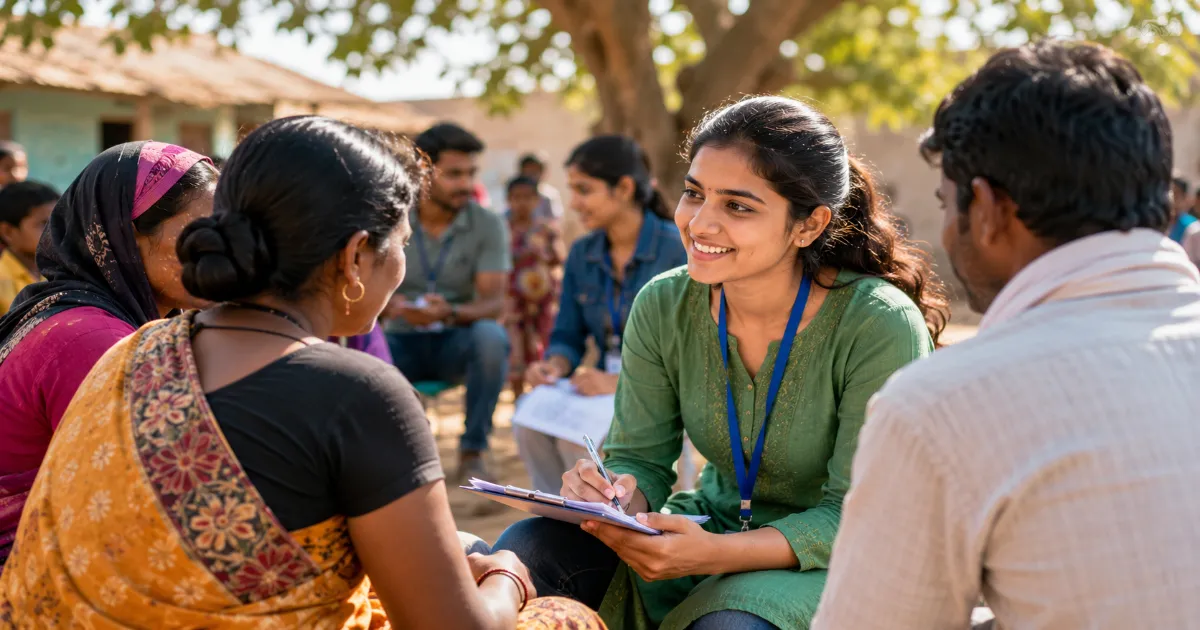
Field programme internships are the most immersive and career-transformative available and the most humbling. You’ll live in or near a programme community, accompany field staff on their daily activities, conduct community meetings, observe government coordination sessions, and document programme implementation realities from the ground up. Organisations like Gram Vikas, Barefoot College, PRADAN, Samarthan, and the field offices of national NGOs like CRY, Pratham, and SEWA offer these experiences. Field interns routinely describe these placements as the experience that convinced them to build a career in development or equally, the experience that revealed the sector wasn’t the right fit for them. Both outcomes are valuable. You need to know before you invest years of your career in a direction that doesn’t genuinely resonate.
📍 Key Cities & Field Locations
New Delhi / NCR
INGO HQs · UN Agencies · Policy NGOs
Most openings
Mumbai & Bangalore
CSR · Social Finance · Tech NGOs
Growing fast
Field States
UP, Bihar, Rajasthan, Odisha, MP
Best field experience
Remote / Hybrid
Research · Comms · M&E roles
Accessible from anywhere
🎁 What You Gain from an NGO Internship
Beyond the stipend, an NGO internship in India’s development sector gives a fresher a set of professional assets that cannot be obtained from any classroom, textbook, or online course. Here is a realistic breakdown of what you actually walk away with.
📜
Completion Certificate & Professional Reference Letter
Most NGOs issue a formal Internship Completion Certificate on letterhead confirming your role, responsibilities, duration, and performance. At INGOs and UN agencies, the completion certificate is particularly valued by graduate school admissions committees and development sector employers. More importantly, a strong Reference Letter (or Letter of Recommendation) from your supervisor specifically addressing your analytical capabilities, communication skills, initiative, and mission alignment is one of the most powerful documents in your career toolkit at this stage. Ask your supervisor explicitly for a reference letter (not just a certificate) before your last week supervisors are usually happy to write one for interns they valued, but rarely do it without being asked.
🗂️
Concrete Portfolio Work: Reports, Data, Published Content
The portfolio pieces you produce during an NGO internship a field visit report, a baseline survey dataset you helped clean, a social media post series that generated engagement, a research literature review, a concept note you contributed to are the most tangible evidence of your capabilities that you carry into your job search. Ask explicitly for permission to include specific work products in your portfolio (respecting any confidentiality requirements) and keep copies of everything you produce. A fresher with even 2–3 strong NGO portfolio pieces is significantly more competitive for junior development sector roles than one who has only academic work to show.
🤝
Your First Development Sector Professional Network
The relationships you build during an NGO internship with your supervisor, the senior managers you interact with, the peer interns from other institutions are your first professional development sector network. This sector is genuinely tight-knit in India: senior professionals know each other across organisations, and a warm introduction from a mutual contact accelerates hiring conversations significantly. Connect with every person you meet professionally on LinkedIn before your last week, maintain those connections with periodic updates, and don’t hesitate to reach out when you’re job-hunting. Supervisors who observed you perform well during an internship often become the most effective advocates you have in the sector sometimes creating roles specifically for former interns they trust.
🧠
Clarity on Your Thematic & Geographic Focus
One of the most practically valuable outcomes of an NGO internship and one that is rarely discussed in formal career guidance is the clarity it provides about what you actually want to work on. Most freshers enter their first development sector experience with a broad interest in “social change” and emerge with a much sharper sense of whether they want to work in health, education, gender, livelihoods, or policy and whether they prefer field implementation, desk research, advocacy, or management. This specificity is career gold a graduate programme or job application that says “I want to work in WASH programme implementation in underserved urban communities based on my internship experience at [X]” is immediately more compelling than one that says “I am passionate about helping society.”
🚀
Direct Pathway to a Full-Time Role or Competitive Fellowship
A strong internship performance at a credible NGO is the most direct route to a full-time junior role in the sector. Several organisations particularly Tata Trusts, Azim Premji Foundation, Teach For India, and the field offices of INGOs like Oxfam India and Save the Children explicitly recruit from their intern alumni pool for junior positions. The Pravah Internship-to-Employment track, the Dasra Social Impact Programme, and the Young India Fellowship all have direct connections to NGO employment. Beyond direct employment, a high-quality NGO internship is the most effective supporting evidence for applications to competitive postgraduate fellowships Chevening, Fulbright, Erasmus Mundus, and the Acumen Fellow Programme all look for demonstrated real-world development sector engagement as part of their selection criteria.
📨 How to Apply for NGO Internships in India
The application process for NGO internships in India is accessible but competitive for the best positions. Here is a step-by-step approach that significantly improves your success rate as a fresher.
Register on Development-Sector Internship Portals
Internshala.com has the largest volume of NGO internship listings in India and is where most national NGOs post paid positions first. DevNetJobsIndia.net lists internship opportunities alongside full-time roles at INGOs and bilateral organisations. Idealist.org carries NGO and social sector internships with a strong INGO presence. The AIESEC India network places students in social development internships both domestically and internationally. Youth Ki Awaaz and India Development Review also regularly publicise fellowship and internship openings from credible sector organisations. Set up daily email alerts on Internshala and DevNetJobs for “NGO intern,” “social sector internship,” and your thematic area of interest to capture new postings within hours of publication.
Apply Directly to Your Target Organisations
Many of the best NGO internships in India are never posted on public boards they are filled through direct applications to the organisation’s HR email or through institutional partnerships with universities. Identify 8–12 organisations whose work specifically aligns with your thematic interest, visit each organisation’s website to find their intern application process, and send a tailored application directly to their HR inbox (or the contact specified on their internship page) even when no specific opening is listed. A direct application with a specific, well-researched cover letter that references the organisation’s current programmes by name will almost always get a response whereas generic applications sent through portals may not. This proactive approach is how most high-quality NGO internships at INGOs and foundations are actually filled.
Write a Mission-Specific Cover Letter: Not a Template
Your cover letter is your most important application document for an NGO internship more important than your CV at this career stage. It must answer three questions specifically Why this organisation (not “NGOs in general”)? Why this thematic area (with specific evidence of your prior engagement)? What specific contribution do you plan to make (concrete, not generic)? A cover letter that opens with “I am deeply passionate about social change and want to contribute to your organisation” will be set aside immediately. One that opens with “I am a final-year MSW student at TISS with a research focus on urban child nutrition, and I am specifically interested in your POSHAN programme in Rajasthan because…” will be read. Three paragraphs. Two pages maximum. No generic sentences.
Leverage Your University Placement Cell & Faculty Networks
TISS, IRMA, XIMB, IIFM, and ISDM all have active placement cells and institutional partnerships with leading NGOs and INGOs that create structured internship pipelines for their students. Faculty members in social work, public policy, development studies, and public health departments are often personally connected to programme officers and HRDs at organisations that offer internships and a faculty recommendation can be more effective than a cold application. Ask your academic advisor or department HOD explicitly whether they have relationships with organisations in your area of interest and whether they would be willing to introduce you. Don’t wait for placements to come to you seek them proactively through every legitimate institutional channel available.
Prepare a Strong, Specific Interview Response
NGO internship interviews are typically 20–40 minutes, conversational, and focused on three things: your motivation and values alignment, your knowledge of the sector and the specific organisation, and your ability to think critically about development challenges. Prepare answers to “Why do you want to work in the development sector?”, “What do you know about our current programmes?”, “Tell me about a social issue you’ve researched deeply what did you find?”, and “What specific skills do you hope to develop through this internship?” Read the organisation’s latest annual report, three recent social media posts, and one published report or case study before your interview. This level of preparation takes 2–3 hours and is the single most impactful thing you can do to improve your interview performance.
Apply & Search on These Platforms:
📅 Updated
June 2026 (Active)
💼 Type
Internship · 1–6 Months
📊 Openings
500+ Pan-India
🚀 Your Development Sector Career Starts with One Internship
India’s development sector rewards those who start early and stay curious. One well-chosen NGO internship even before you graduate can open doors to fellowships, full-time roles, and a career doing work that genuinely matters. Register on Internshala and DevNetJobs, write a specific cover letter, and take that first step today.





Leave a Comment