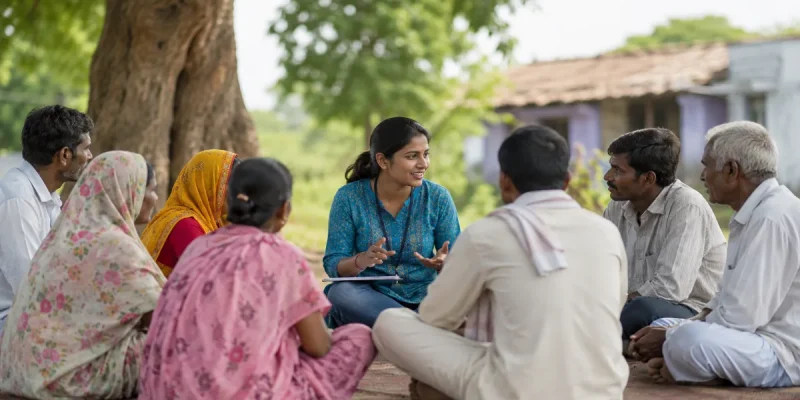

The Community Engagement Manager is one of the most pivotal and rewarding roles in India’s rapidly professionalising social sector in 2026. Sitting at the crucial intersection between an NGO’s programmes and the communities it serves, this role is responsible for building trust, mobilising participation, and ensuring that development interventions are genuinely owned and driven by the communities themselves. As Indian NGOs grow in scale and sophistication powered by mandatory CSR funding, institutional grants, and a sharper focus on measurable, sustainable impact the demand for skilled professionals who can bridge organisations and communities has grown substantially. For experienced development professionals, social workers, and mission-driven managers seeking meaningful work with competitive compensation, the Community Engagement Manager role offers a genuine, fulfilling career. This complete guide covers the salary, top organisations, required skills, and exactly how to find and apply for these roles.
💰 Salary & Compensation (2026)
Average Annual CTC
₹5–₹14 LPA
DevNetJobs · NGOBOX · Naukri · June 2026
Large NGOs / CSR Foundations
₹12–₹20 LPA
Senior / Lead Engagement roles
Small / Grassroots NGO
₹4–₹7 LPA
annual CTC
Mid / Large NGO
₹8–₹14 LPA
annual CTC
CSR Foundation / INGO
₹12–₹20 LPA
annual CTC
Field Allowances
Often Added
travel + field per diem
🌍 About the Community Engagement Manager Role
The Community Engagement Manager is the human bridge between an NGO and the communities it serves. Development programmes whether in education, health, livelihoods, water and sanitation, or women’s empowerment succeed or fail largely on the strength of community ownership. A programme designed in an office but not genuinely embraced by the community it targets will struggle; a programme that mobilises real participation, builds local trust, and is shaped by community voices will thrive and sustain. The Community Engagement Manager is the professional responsible for making that ownership happen: building relationships with community members and local leaders, mobilising participation, facilitating community meetings and decision-making, gathering community feedback, and ensuring that programmes are responsive, respectful, and rooted in the realities and aspirations of the people they serve.
The day-to-day work of a Community Engagement Manager is varied and people-centred. It includes conducting community mobilisation and outreach, organising and facilitating community meetings, gram sabhas, self-help groups, and committees, identifying and nurturing local champions and volunteers, managing field teams of community mobilisers and frontline workers, liaising with local government bodies (Panchayati Raj institutions, block and district officials) and other local stakeholders, gathering and channelling community feedback into programme design, resolving conflicts and managing community dynamics sensitively, and documenting community engagement activities for programme reporting and donors. The role typically involves significant field presence and travel, building deep relationships in the communities served, alongside management responsibilities for field teams and engagement strategy.
The professionalisation of India’s social sector has elevated this role significantly. Funders particularly CSR funders operating under India’s mandatory CSR law and institutional grant-makers increasingly demand evidence of genuine community participation, sustainability, and measurable impact, not just activity outputs. This has made skilled community engagement a strategic priority rather than a peripheral function. Organisations now recognise that strong community engagement is what makes their programmes effective, sustainable, and fundable, and they are willing to invest in skilled managers who can deliver it. The role has correspondingly become more strategic, better compensated, and a recognised pathway toward programme leadership, with Community Engagement Managers often progressing to Programme Manager, Regional Manager, and senior leadership positions.
The role exists across a wide range of organisations and thematic areas. Large national NGOs (Pratham, CRY, Smile Foundation), grassroots and field-based organisations (PRADAN, SEWA, and countless district-level NGOs), corporate CSR foundations implementing community programmes, international NGOs (INGOs) operating in India, and government-NGO partnership programmes all employ community engagement professionals. The thematic focus varies education, health, livelihoods, water and sanitation, women’s empowerment, child rights, environment, disability but the core competency of building authentic, effective relationships between an organisation and a community is universal. This breadth means a skilled Community Engagement Manager has genuine mobility across themes, geographies, and organisation types throughout their career.
💡 Community Engagement vs Programme Management vs Communications
These related roles are sometimes confused. Community Engagement focuses specifically on building relationships with and mobilising the communities a programme serves it is field-facing and people-centred. Programme Management is broader, owning the overall delivery, budget, timeline, and outcomes of a programme (community engagement is one part of it). Communications (or “community management” in a digital sense) focuses on external audiences, donors, social media, and storytelling a different function entirely. When applying, read the job description carefully: a “Community Engagement Manager” at an NGO is overwhelmingly about real-world community mobilisation and relationship-building, not digital community management.
🏢 Top Organisations Hiring Community Engagement Managers
📋 Eligibility & Requirements
The Community Engagement Manager is a mid-level management role with specific requirements. Here is the complete breakdown of what organisations look for.
1
Education: Graduation Mandatory; MSW / Development Studies Preferred
A Bachelor’s degree is the minimum, but a Master’s degree in Social Work (MSW), Rural Development, Development Studies, Sociology, Public Policy, or a related field is strongly preferred and often expected for manager-level roles. Graduates of dedicated development institutions Tata Institute of Social Sciences (TISS), Azim Premji University, the Institute of Rural Management Anand (IRMA), Xavier Institute of Social Service, and similar are particularly valued and well represented in the sector. That said, the social sector also genuinely values demonstrated field experience and aptitude: a candidate with strong grassroots community work experience and a Bachelor’s degree can be highly competitive even without a specialised Master’s. The combination of relevant education and real community-engagement experience is the strongest profile.
2
Experience: 3 to 8 Years in Community / Development Work
Manager-level community engagement roles typically require 3–8 years of relevant experience in community mobilisation, development programmes, social work, or field-based NGO work. The experience must demonstrate genuine, hands-on community engagement not just office-based programme administration. Organisations look specifically for evidence that you have worked directly with communities, built trust at the grassroots, mobilised participation, and ideally managed field teams. Experience in the relevant thematic area (education, health, livelihoods, etc.) and geography (specific states, rural vs urban) is valued, though strong community engagement skills are substantially transferable across themes. For senior or lead roles, 8+ years with demonstrated team and strategy leadership is expected.
3
Local Language Fluency & Cultural Fluency
Fluency in the local/regional language of the communities served is essential and often non-negotiable community engagement happens in the community’s own language, and the ability to build trust, facilitate meetings, and communicate authentically with community members requires genuine local-language fluency. Equally important is cultural fluency a deep understanding of and respect for the social, cultural, caste, gender, and political dynamics of the communities served, and the ability to navigate them sensitively. Organisations often prefer candidates with roots in or long experience of the specific region, as this brings the linguistic and cultural fluency that makes community engagement effective. For multi-state roles, fluency in Hindi plus relevant regional languages is valued.
4
Field Readiness & Willingness to Travel
Community engagement is fundamentally field-based work. The role requires significant time in the field in villages, urban settlements, or wherever the communities are often in conditions that may be physically demanding or basic, and frequently involving substantial travel. Candidates must be genuinely willing and able to spend time in the field, build relationships in person, and adapt to field conditions. Some roles require relocation to or being based in the programme area rather than a metro office. Honesty with yourself and the organisation about your field availability and willingness is important, as a role requiring extensive field presence is unsuitable for someone seeking primarily office-based work.
5
Genuine Commitment to the Cause & Communities
The social sector values authentic mission alignment highly, and for community engagement specifically, a genuine respect for and commitment to the communities served is essential not as a credential, but because it is what makes the work effective and is readily sensed by both communities and interviewers. Organisations look for candidates who understand and believe in participatory, community-led development; who treat community members as partners and rights-holders rather than passive beneficiaries; and who are motivated by genuine social purpose. In interviews, the ability to articulate a thoughtful, specific, values-grounded understanding of community engagement and the cause drawing on real experience rather than generic statements is what distinguishes the strongest candidates.
⚡ Key Skills & Competencies
🤝 Community & Field Skills
The core craft of community engagement is the ability to mobilise and organise communities effectively. This includes mastery of participatory facilitation methods Participatory Rural Appraisal (PRA), participatory learning and action, focus group discussions, and community mapping that surface community voices and enable genuine participation rather than top-down delivery. Building and strengthening community institutions (self-help groups, village committees, user groups, collectives) is central to sustainable engagement. Liaising effectively with Panchayati Raj institutions, local government officials, and other local stakeholders requires diplomacy and an understanding of local governance. And the ability to navigate community dynamics, resolve conflicts, and manage the social and political sensitivities of community work around caste, gender, religion, and local power structures sensitively and ethically is what separates an effective community engagement professional from a merely well-intentioned one.
📊 Management & Documentation Skills
As a management role, the Community Engagement Manager must combine field craft with solid management and documentation skills. Managing and motivating field teams of community mobilisers and frontline workers recruiting, training, supervising, and supporting them is a central responsibility. The ability to document community engagement activities clearly and write quality reports for programme management and donors is essential, as funders increasingly require detailed evidence of participation and outcomes. Basic monitoring and evaluation (M&E) competence designing simple data-collection tools, gathering community feedback systematically, and contributing to impact measurement is increasingly expected, often using mobile data tools like KoboToolbox alongside Excel and Google Sheets. English (and Hindi) writing for reports, combined with strong local-language verbal facility for fieldwork, is the practical communication profile of an effective manager. Comfort with MS Office and basic digital reporting tools rounds out the toolkit.
📍 Where the Roles Are
Rural & Tribal Areas
Field-based programmes · Livelihoods, health
Most field roles
Urban Settlements
Slum & urban poor programmes
Metro NGO work
State / District HQs
Regional offices · Field + coordination
Manager bases
Metro HQs (Hybrid)
Delhi, Mumbai, Bengaluru · Strategy roles
CSR & INGO offices
🎁 Benefits & What You Gain
❤️
Deeply Meaningful, Purpose-Driven Work
Community engagement work offers the rare combination of professional management responsibility and genuine, visible social impact. You work directly with communities, see the tangible difference your efforts make in people’s lives, and build relationships that are often deeply rewarding. For those motivated by purpose, this proximity to real impact helping communities access education, improve livelihoods, secure rights, or improve health provides a sense of meaning and fulfilment that many higher-paid corporate roles cannot match.
📈
Clear Progression to Programme Leadership
Community Engagement Manager is a recognised stepping stone to senior social-sector roles: Programme Manager, Regional/State Manager, Head of Programmes, and into Director-level positions and CSR leadership. The combination of field credibility, community relationships, and management experience built in this role is exactly what organisations seek in their programme leaders. With the sector’s professionalisation, well-compensated senior roles (₹15–₹30+ LPA) are increasingly available to those who build a strong track record, and the transition into corporate CSR leadership is a particularly well-trodden, well-paid pathway.
🧑🏫
Professional Development & Sector Networks
Established NGOs, CSR foundations, and INGOs invest in staff development training in facilitation, M&E, programme management, and leadership and the social sector has a strong, collaborative professional network. You build relationships across NGOs, funders, government, and the wider development ecosystem that support your career throughout. Sector platforms, conferences, and the alumni networks of development institutions (TISS, IRMA, APU) provide ongoing learning and opportunity. The skills and network built compound over a career in ways that open continually expanding opportunities.
🌍
Transferable Skills & Cross-Sector Mobility
The skills built in community engagement stakeholder management, facilitation, team leadership, cross-cultural communication, and delivering results in complex, resource-constrained environments are highly transferable. Community engagement professionals move successfully into corporate CSR, development consulting, social enterprise, impact investing, government programme management, and philanthropy. The depth of real-world management capability built by working with communities is genuinely valued well beyond the NGO sector, giving the role strong long-term career optionality across the broader social-impact economy.
📨 How to Find & Apply
Search on DevNetJobs, NGOBOX & Sector Portals
DevNetJobsIndia (devnetjobsindia.org) and NGOBOX (ngobox.org) are the leading dedicated portals for professional and management-level development sector jobs in India the primary place to find Community Engagement Manager roles. Idealist (idealist.org) lists Indian and international social-sector roles. Naukri and LinkedIn also carry NGO and CSR management positions search “community engagement manager,” “community mobilisation,” “programme manager NGO,” and your thematic area and state. Set up alerts on these platforms and apply promptly, tailoring your application to each role.
Apply Directly on NGO & CSR Foundation Websites
Major organisations recruit through their own careers pages the “Careers” or “Work With Us” sections of Pratham, CRY, Smile Foundation, PRADAN, SEWA, Tata Trusts, Reliance Foundation, Azim Premji Foundation, Save the Children India, CARE India, WaterAid India, and others. Applying directly ensures your application reaches the organisation’s genuine recruitment process. Identify organisations whose cause and geography align with your experience and interest, and apply directly to relevant openings targeted applications to well-matched organisations consistently outperform mass applications.
Build a CV That Demonstrates Real Field Impact
Your CV should lead with concrete community engagement achievements “Mobilised 40 villages across 2 districts; formed and strengthened 65 self-help groups reaching 800+ women; facilitated community ownership that sustained the programme after grant period.” Specify the communities, scale, thematic area, languages, and field geography you have worked in, and quantify participation and outcomes wherever possible. State your education (highlighting MSW/development qualifications), your local-language fluency, and any team management experience clearly. The social sector responds strongly to authentic, specific evidence of community impact vague descriptions of responsibilities without concrete field results consistently underperform.
Prepare for Values-Based & Field-Scenario Interviews
Social-sector interviews probe both competence and values. Prepare to discuss specific community engagement situations you have handled how you built trust, mobilised participation, navigated a conflict, or sustained community ownership with concrete examples. Be ready to articulate your understanding of participatory, community-led development and your motivation for the work, drawing on genuine experience rather than generic statements. Research the organisation’s programmes, approach, and the communities and geography it works in, and show how your experience and values align. Many roles include field-scenario or situational questions assessing how you would handle real community dynamics thoughtful, specific, ethically grounded answers stand out.
Verify the Organisation & Use Sector Networks
Before joining, verify the organisation’s legitimacy and credibility check its registration (Trust/Society/Section 8), 80G/12A and FCRA status if relevant, its reputation in the sector, its funders, and its track record. Platforms like GuideStar India and the organisation’s annual reports and audited accounts indicate transparency and credibility. Tap into sector networks the alumni of development institutions, sector platforms, and personal connections in the field both to find opportunities and to gather honest insight into prospective employers. A reputable, well-governed organisation offers not just a salary but professional growth, ethical practice, and genuine impact, which matter as much as compensation in choosing where to build a social-sector career.
Apply & Search on These Platforms:
📅 Posted
June 2026 (Active)
💼 Type
Full-time · Field + Mgmt
📊 Experience
3–8 Years
🤝 Bridge Organisations & Communities Lead Real Social Change
The Community Engagement Manager role offers purpose-driven work, competitive social-sector compensation, and a clear path to programme leadership for those who can build genuine trust and mobilise communities. Build a CV that demonstrates real field impact, apply through DevNetJobs and NGOBOX and directly to mission-aligned organisations, and prepare values-grounded interview answers. Your meaningful career in social change starts here.





Leave a Comment